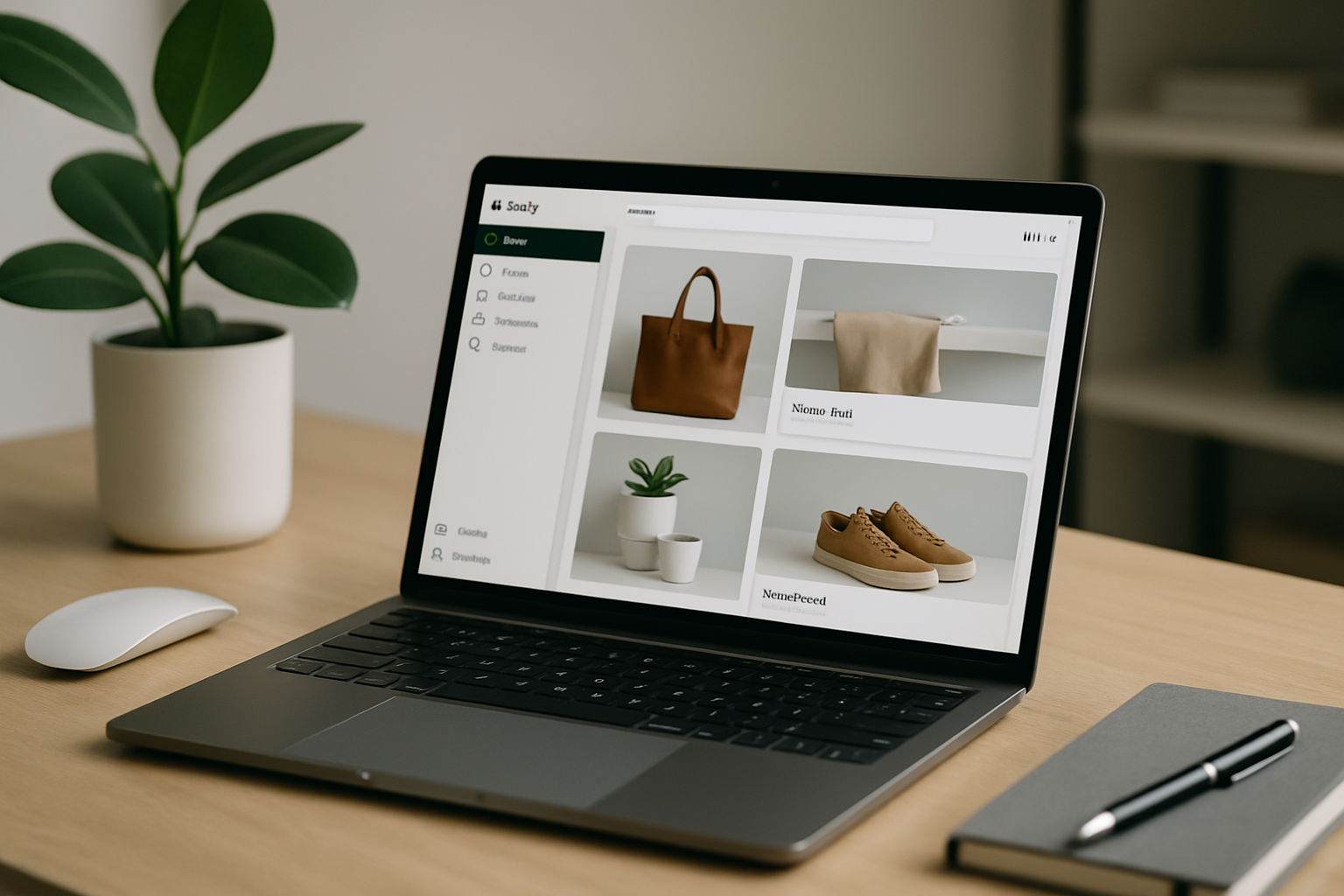
If you're a Wellington business owner wondering whether your Shopify store is pulling its weight, you're not alone. Most owners built their store years ago, added products as they went, and haven't looked under the bonnet since. This is a benchmark piece to help you judge that, covering the three things that actually decide whether a store sells: speed, product pages, and checkout flow.
We build Shopify stores for NZ businesses at Media Giant, so this isn't theory. It's what we look for on day one of every build.
Why Speed Is the First Thing to Check
Before you touch design or copy, speed tells you almost everything about how a store was built. A slow store loses customers before they see a single product, and that loss compounds every month you leave it.
What "Fast" Actually Means in 2026
A well-built Shopify store should score in the high 90s on Google PageSpeed. That's not a vanity number. It reflects:
- Product images that are properly compressed, not uploaded straight from a phone
- A theme built for performance, not stacked with apps that each add their own loading scripts
- Clean code underneath, rather than years of patched-together customisations
If your store is loading slowly on mobile, that's usually the first sign the build hasn't been looked after.
The Quiet Cost of a Slow Store
Most owners don't notice slow speed because they're used to their own site. Customers notice immediately, especially on mobile data in areas outside main centres. A slow product page doesn't just lose the sale, it often loses the customer for good. They don't complain. They just leave and buy from whoever loaded faster.
What a Well-Built Product Page Looks Like
Your product pages do more selling than your homepage ever will. Most traffic lands here first, from Google, from Shopping ads, from a shared link. If the page doesn't answer the customer's questions fast, they bounce.
The Non-Negotiables
A product page that's actually built to sell, rather than just built to exist, includes:
- Clean, fast-loading product images that show the item clearly, without dragging down page speed
- Accurate variants, pricing and shipping rules, so customers aren't guessing or abandoning at the last step
- Real product content, not a one-line description copied from a supplier's spreadsheet
- Collection structure that makes sense, so products are easy to browse from a category, not just findable by direct search
Why Product Loading Is Often the Weak Point
Here's something a lot of store owners don't realise until it's too late: loading products properly, with correct variants, pricing and shipping, is genuinely time-consuming. It's the part that gets rushed when a store is set up quickly, and it's the part that quietly breaks the shopping experience later.
This is why free product loading matters as part of a proper build. Someone checks the data, not just uploads it. A Wellington boutique we built for, Possum Boutique, had this handled for them as part of their build, and their organic traffic tripled within six months on the new store. That kind of result doesn't come from a nicer template. It comes from the underlying structure being right: fast pages, clean architecture and content that's actually there to be found by Google.
Content Is Part of the Page, Not an Afterthought
A well-built store treats product content as part of the build, not something to add later. Every package we deliver includes content writing, because a page with no real description gives Google nothing to rank and gives customers no reason to trust the product.
What a Well-Built Checkout Flow Looks Like
Checkout is where a lot of otherwise decent stores lose the sale. Shopify's own checkout is solid, but how it's set up around your business, shipping, GST, and payment options is what determines whether customers actually get through it.
The Basics That Should Be Sorted, Not Assumed
- Payments, shipping and GST handled correctly, so there are no surprises at the final step
- A theme that's SEO-ready and built for conversion, not just decorative
- A store architecture that scales, whether you're running 10 products or 10,000
A store that was built quickly on a budget theme years ago often has checkout settings that were never revisited as the business grew. If you've added new shipping zones, new payment methods, or more products since launch, it's worth checking whether checkout still reflects that.
Google Shopping Changes the Standard
In 2026, a well-built Shopify store isn't judged on its own site alone. It needs to be visible where people are already shopping, which means Google Shopping Ads setup built into the store from day one, not bolted on later as an afterthought. A store without this is invisible to a huge share of buying-intent searches before a customer even lands on the site.
How to Judge Your Own Store
If you're not sure where your store stands, ask yourself these questions:
- Does your product page load fast on mobile, on an average connection, not just office wifi?
- Do your product descriptions say anything useful, or are they copied from a supplier?
- Are your variants, pricing and shipping rules accurate and up to date?
- Is your store set up for Google Shopping, or just sitting on your own domain hoping to be found?
- When did someone last check your checkout flow end to end, as a customer would?
If you hesitated on more than one of these, your store is probably costing you sales you don't even know you're losing.
Getting a Store Built Properly
At Media Giant, we build Shopify stores for NZ businesses using AI-powered development with a person reviewing every output, so the build moves fast without cutting corners. Every Shopify build includes:
- The full store build, with a custom theme designed for conversion, not just looks
- Free product loading, checked before launch
- Google Shopping Ads setup
- Hosting and plain-English reporting, so you know what's happening without needing to be a marketer
It's available from $250 a month with nothing upfront, or $2,500 once, ex GST. Either way, it's the same standard of build: high 90s PageSpeed, SEO-ready architecture, and a store that's set up to sell from day one, not month three.
Your Next Step
If you've read this and you're not confident your current store would pass its own benchmark, that's worth acting on now rather than at the next busy season. We're based in Wellington and have built over 200 websites for NZ businesses. Get in touch and we'll take an honest look at your current store, speed, product pages and checkout included, and tell you plainly what's working and what isn't.